
TripAdvisor Affiliate Program: How to Make Money With It
Here’s something most travel affiliates overlook: you can earn money without anyone booking a hotel. That’s the beauty of the TripAdvisor affiliate program. While other travel programs pay you only when someone completes a booking, TripAdvisor pays you 50% commission for every click you send to their hotel partners. No conversion anxiety, no abandoned carts eating into your earnings. Just clicks that convert into cash.
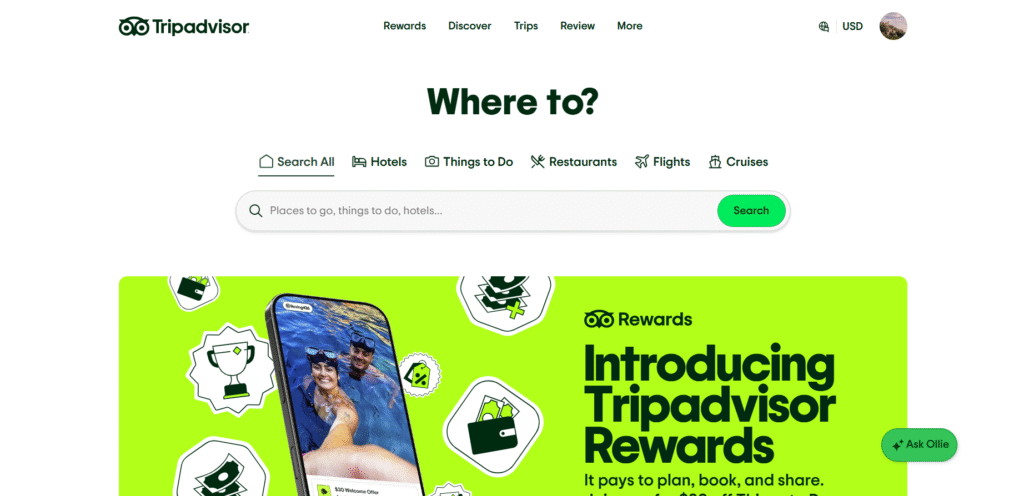
Quick Program Stats:
💰 Commission: 50% per click sent to partner hotels
🍪 Cookie Duration: 14 days
💳 Payment Terms: Monthly via Awin or Commission Junction
🎯 Booking Required: No – you earn on clicks, not bookings
⏱️ Global Availability: Yes, through both networks
Why the TripAdvisor Affiliate Program Actually Works
Most travel affiliate programs sound great on paper until you realize the conversion rates. You send 1,000 visitors, maybe 20 book something, and you earn commissions on those 20. With TripAdvisor, the math changes completely.
You’re not waiting for someone to pull out their credit card and complete a multi-hundred-dollar transaction. You’re simply getting paid when curious travelers click through to compare hotel prices. And let’s be honest, that’s what most travel content consumers do anyway. They research, compare, and click around before making decisions.
The earnings potential becomes straightforward when you do the math. Send 500 clicks per month at an average of $0.30 per click and you’re looking at $150. Scale that to 2,000 clicks and you’re at $600 monthly. Now, those click values vary based on the hotel, season, and length of stay, but the model removes the biggest friction point in affiliate marketing: actual conversions.
Think about your own travel planning behavior. You probably visited a dozen sites before booking your last hotel. TripAdvisor knows this, which is why they built their affiliate program around clicks instead of bookings.
What Makes This Different from Booking.com or Expedia Affiliates
Here’s where it gets interesting. Most travel affiliate programs from Booking.com, Expedia, or Hotels.com pay you commission only when someone completes a booking. That sounds fair until you realize the conversion rate for cold traffic to hotel bookings sits somewhere around 1-3%.
TripAdvisor flips this model. They pay you for qualified clicks to their partner hotels. The click itself has value because TripAdvisor operates as a comparison platform. Hotels pay them for those referrals regardless of immediate booking conversions.
What this means for you is predictable earnings. You’re not gambling on conversion rates. You’re getting paid for doing what you already do best: creating compelling travel content that makes people want to explore options.
The 14-day cookie duration gives your referrals two weeks to click on a hotel partner. If they’re researching a trip happening next month, you’re covered. They can come back multiple times through different devices and you still get credited.
How to Actually Promote TripAdvisor and Make Real Money
Let’s talk tactics. You’re not here for theory, you’re here to make money. The key to succeeding with the TripAdvisor affiliate program is understanding what triggers clicks to hotel comparisons.
Start with destination-specific content. Articles like “Where to Stay in Barcelona: Neighborhood Guide” or “Best Hotels Near Tokyo Disneyland” naturally lead to TripAdvisor links. Your readers are already in research mode. They want options. Give them context, then send them to TripAdvisor to explore prices.
Budget comparison content works exceptionally well. Write posts comparing “Luxury vs Mid-Range Hotels in Paris” or “Is Staying Near the Airport Worth It in Miami?” These posts attract people actively planning trips and comparing options. That’s your money demographic.
Seasonal and event-based content gives you traffic spikes. “Where to Stay for Mardi Gras in New Orleans” or “Hotels for the World Cup in Milan” capitalize on time-sensitive search volume. People need to book soon, they’re clicking everything.
One strategy that works incredibly well is the neighborhood breakdown approach. Instead of recommending specific hotels, you break down a city by neighborhood, explain the pros and cons of each area, then link to TripAdvisor to show all options in that neighborhood. You’re providing value while generating multiple click opportunities per reader.
The Traffic Strategy That Moves the Needle
Organic search remains the most sustainable way to profit from the TripAdvisor affiliate program. Travel content naturally attracts search traffic because people research trips months in advance.
Target long-tail keywords with clear intent. Something like “boutique hotels walkable to downtown Nashville” attracts someone who knows exactly what they want and will click through to explore options. These keywords have lower competition and higher click-through rates.
Pinterest deserves special attention for travel content. Create pins showcasing hotel neighborhoods, area highlights, or accommodation guides. Link these back to your blog posts with TripAdvisor affiliate links embedded. Travel planning happens visually, and Pinterest users spend serious time researching before trips.
YouTube works if you’re willing to put in the effort. Walking tours of neighborhoods, “where I stayed” videos, or destination guides all create opportunities to link to your blog posts with affiliate links in descriptions. The key is making the video valuable enough that people want to explore more options.
Paid traffic can work but requires testing. Facebook ads to destination guides or accommodation comparison posts can be profitable if your cost per click stays below your average TripAdvisor commission. Start with small budgets, test different destinations, and scale what works.
Email marketing becomes powerful once you build a list. Travel enthusiasts love destination recommendations. Send weekly destination spotlights with accommodation insights and TripAdvisor links. The engaged subscribers will click through regularly.
Real Numbers: What You Can Actually Expect to Earn
Let’s get specific because vague earning claims help nobody. Your earnings depend entirely on traffic volume and click-through rates.
A blog post ranking on page one for “where to stay in Lisbon” might get 800 visits per month. If 15% of those visitors click your TripAdvisor links, that’s 120 clicks. At $0.25 average per click, you’re earning $30 monthly from one article. Create 20 solid destination guides and you’re at $600 per month.
The click value varies significantly. Luxury destinations during peak season can pay $0.50 or more per click. Budget destinations in off-season might pay $0.15. This is why diversifying your content across destinations and price points matters.
Time to first commission usually happens within your first month if you’re driving targeted traffic. The beauty of click-based commissions is seeing results faster than booking-based programs. You’re not waiting weeks to see if your referrals converted.
Reaching $1,000 per month requires approximately 4,000 clicks at $0.25 average. That’s roughly 25,000 monthly visitors with a 16% click-through rate. Achievable with 40-50 well-ranking travel articles.
The seasonal factor affects both traffic and click values. Summer travel planning peaks from March to June. Winter holiday planning spikes from September to November. Your earnings will fluctuate with these cycles.
Getting Approved and Set Up Correctly
The TripAdvisor affiliate program operates through two networks: Awin and Commission Junction. You can join through either or both, though most affiliates pick one to simplify tracking.
Approval is straightforward if you have legitimate travel content. They want to see you’re creating genuine value, not spamming links. A blog with 10-15 quality travel articles usually gets approved quickly. Make sure your site has clear navigation, an about page, and a privacy policy.
The application asks about your promotional methods and traffic sources. Be honest and specific. If you’re doing SEO and Pinterest, say so. They’re looking for quality affiliates, not necessarily massive traffic.
Once approved, you’ll get access to tracking links and creative assets. The interface lets you create deep links to specific destinations or hotels. Always use deep links rather than generic homepage links. They convert better and look more professional.
Set up your tracking properly from day one. Use link shorteners or your own branded domain redirects to make affiliate links look cleaner. Nobody wants to click a messy 200-character tracking URL.
Common Mistakes That Kill Your Earnings
The biggest mistake is treating all content equally. Not every travel article needs TripAdvisor links. Link from content where people are actively considering where to stay, not from general destination inspiration posts.
Over-linking destroys credibility. If every paragraph has an affiliate link, readers smell the desperation. Place links strategically where they add value. A well-placed link in a neighborhood comparison generates more clicks than twenty random links scattered throughout.
Ignoring mobile users costs you money. Over 60% of travel research happens on mobile devices. Make sure your affiliate links are easy to click on small screens. Test your content on your phone before publishing.
Not updating content leaves money on the table. Travel information changes constantly. Hotels close, new neighborhoods become popular, and seasons shift. Refresh your top-performing articles every six months to maintain rankings and relevance.
Focusing only on major destinations creates unnecessary competition. Yes, everyone searches for Paris and New York hotels, but competition is brutal. Mid-sized cities and emerging destinations often have better ranking opportunities with decent search volume.
Who This Program Actually Works For
Travel bloggers with established content are the obvious winners. If you’ve already built a library of destination guides, adding TripAdvisor links is low-effort monetization that complements existing revenue streams.
New travel bloggers benefit from the click-based model. You don’t need massive traffic to see earnings. A few hundred targeted visitors per month start generating commissions immediately, giving you motivation to keep creating content.
Niche travel sites focusing on specific types of travel work incredibly well. Solo travel blogs, family vacation sites, or luxury travel content all have dedicated audiences actively planning trips and researching accommodations.
City or regional tourism sites can monetize local knowledge. If you run a guide to Austin or a Colorado travel resource, TripAdvisor links let you monetize visitor accommodation research without building booking capabilities.
This program struggles for general lifestyle bloggers who occasionally mention travel. The occasional hotel recommendation won’t generate enough clicks to make the program worthwhile. You need consistent travel content production.
The Honest Drawbacks You Should Know
The 14-day cookie duration is shorter than many competing programs. Booking.com offers 30 days, Agoda gives you 45 days. If someone discovers your content early in their planning process, they might fall outside your commission window.
Click values can be unpredictably low. While $0.30 per click sounds decent, you might see plenty of $0.10 clicks mixed in. This makes income forecasting challenging until you’ve built sufficient data.
You have no control over the hotel selection or prices on TripAdvisor. If their partner hotels are consistently more expensive than alternatives, your click-through rates suffer. You’re recommending a comparison tool, not specific properties.
The program availability through third-party networks means another layer between you and the company. If the network has issues or changes terms, your program access gets affected.
Competition from other comparison sites means travelers visit multiple platforms. Your referral might click through to TripAdvisor, then also check Booking.com and Hotels.com before deciding. You only get paid for the TripAdvisor click, regardless of where they eventually book.
Making It Work Long-Term

Success with the TripAdvisor affiliate program comes down to consistent content production and smart traffic strategies. You’re building a travel resource that compounds over time as articles rank and accumulate traffic.
Focus on creating genuinely helpful accommodation guides. Answer the questions travelers actually have. Which neighborhood is best for families? Where should solo travelers stay for safety and social opportunities? What areas have the best public transit access?
Build topical authority in specific destinations rather than covering everywhere superficially. Becoming the go-to resource for Amsterdam travel or Pacific Northwest trips gives you SEO advantages and audience loyalty.
Diversify your traffic sources beyond just Google. Pinterest, YouTube, email, and even strategic paid traffic reduce your dependence on algorithm changes. Multiple traffic sources create more stable income.
Track your metrics religiously. Know which articles generate the most clicks, what types of content convert best, and which destinations pay higher click values. Double down on what works and cut what doesn’t.
Remember that travel affiliate marketing is a marathon, not a sprint. Your articles from six months ago might just be hitting their ranking stride. Keep creating while your older content does the heavy lifting.