
Canon Affiliate Program: How To Make Money With It
Earning 2.5% commissions on cameras that cost $1,000+ means serious income potential for photography bloggers and tech reviewers. The Canon affiliate program lets you tap into one of the most trusted camera brands worldwide, with a 30-day cookie window to capture those high-ticket sales. While the commission rate seems modest, the average order value in photography equipment makes this program worth a serious look for content creators in the tech and photography space.
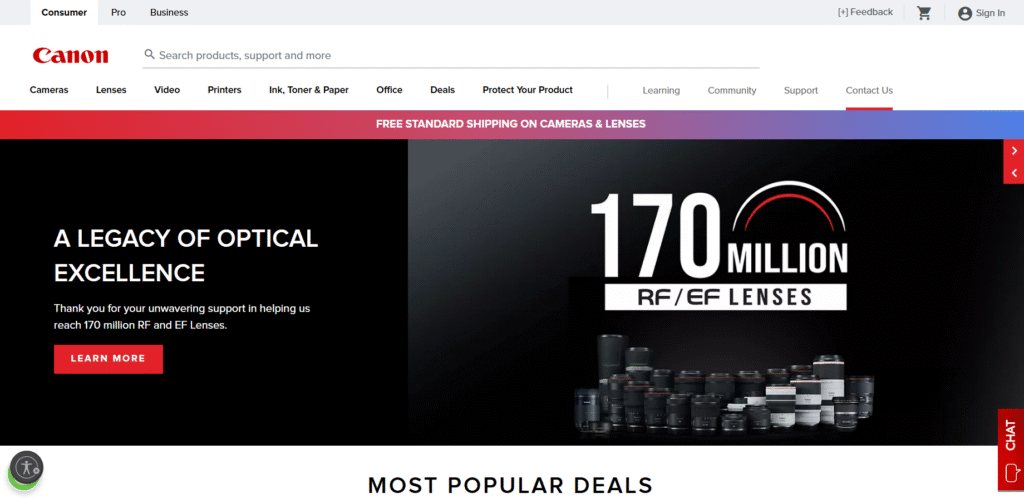
Quick Program Stats
💰 Commission: 2.5% per sale
🍪 Cookie Duration: 30 days
💳 Payment Terms: Monthly (Payoneer, Check, Bank Transfer)
🌐 Network: Commission Junction
📦 Ships To: US customers only
⚡ Average Product Price: $500-$3,000+
Why Canon’s Program Actually Makes Financial Sense
Here’s what most people miss about that 2.5% commission rate. When you’re promoting $2,000 camera bodies and $1,500 lenses, that percentage translates to $50-75 per sale. Compare that to promoting $50 products at 10% commission where you’re only making $5.
The math gets interesting fast.
If you drive just 20 sales per month at an average order value of $1,200, you’re looking at $600 monthly. Scale that to 50 sales and you’re at $1,500. The real opportunity here is that photographers who invest in Canon typically buy multiple items—bodies, lenses, accessories, printers. Your 30-day cookie captures those additional purchases.
Canon’s reputation does half the selling for you. You’re not convincing people to trust an unknown brand. You’re helping them choose between Canon models they already want.
Getting Started With Canon’s Affiliate Program
The Canon affiliate program runs through Commission Junction, which means you’ll need a CJ account first. The approval process is straightforward if you have established content about photography, cameras, or tech reviews.
What Canon looks for in affiliates:
Your site should have photography tutorials, camera reviews, or tech content that naturally aligns with their products. They want to see you’re not just slapping affiliate links everywhere but actually providing value to an audience that cares about quality imaging equipment.
The approval typically takes 2-3 business days. Once approved, you’ll access their product feeds, banners, and tracking links through the CJ dashboard. Canon provides a dedicated affiliate management team, though response times can vary depending on the season.
Who Actually Buys Canon Equipment (And How to Reach Them)
Canon serves three distinct customer segments, and understanding this changes your entire promotion strategy.
Hobbyist photographers are upgrading from smartphone photography or entry-level cameras. They’re researching extensively, reading comparisons, and watching YouTube reviews. They respond to content that demystifies technical specs and shows real-world results. Think “Canon EOS R6 vs Sony A7 III” or “Best Canon Camera for Wedding Photography.”
Professional photographers and videographers already know what they want. They’re looking for the best price, in-depth technical reviews, or validation of their choice. Content that works includes firmware update guides, lens compatibility charts, and professional workflow tutorials. These buyers have higher order values and often purchase multiple items.
Business customers need documentation, event photography, or video production equipment. They respond to ROI-focused content, durability discussions, and compatibility with existing workflows.
Your content strategy should target at least one of these segments specifically rather than trying to appeal to everyone.
Traffic Strategies That Convert for High-Ticket Camera Gear
Search traffic dominates camera equipment purchases because people research heavily before spending thousands. The key is capturing them at different stages of their buying journey.
Early research stage: Create comparison content and buying guides. “Best Canon Cameras for Beginners 2025” or “Canon vs Sony: Which System Should You Choose?” These articles build authority and capture bookmark-worthy traffic. Include your affiliate links but focus on education. These visitors aren’t ready to buy yet, but they’ll return when they are.
Mid-consideration stage: Target model-specific content. “Canon EOS R5 Real World Review” or “Is the Canon RF 24-70mm f/2.8 Worth It?” These searchers are narrowing their options. Include comparison tables, sample images, and detailed pros/cons. Your affiliate links work harder here because purchase intent is higher.
Ready-to-buy stage: Capture deal-seekers with “Canon EOS R6 Best Price” or “Where to Buy Canon Lenses.” These are bottom-funnel keywords with high commercial intent. Keep these articles updated with current pricing and availability.
YouTube is your second-biggest opportunity. Photography is inherently visual, and watching someone use a camera beats reading about it. You don’t need fancy production—solid sample footage from the camera you’re reviewing does the selling. Your video descriptions become prime real estate for affiliate links.
Pinterest surprises people with its effectiveness for camera gear. Photography enthusiasts actively search for inspiration and tutorials. Create pins linking to your in-depth reviews or comparison guides. The platform’s visual nature and long content lifespan make it ideal for evergreen camera reviews.
Email marketing works differently here than with impulse purchases. Build a list around photography education—tutorials, editing tips, gear guides. When Canon releases new products or has promotions, your educated audience trusts your recommendations. The key is providing so much value that your occasional gear recommendation feels like helpful advice rather than selling.
Creating Content That Actually Converts Browsers to Buyers
Generic camera reviews get ignored. The internet has enough “I tested this camera for a week” content. What works is solving specific problems your audience faces.
Instead of “Canon EOS R6 Review,” try “Canon EOS R6 for Real Estate Photography: 30-Day Test.” The specificity attracts a targeted audience with money to spend and clear needs to solve. Your content becomes the answer they’ve been searching for.
Sample images and video footage carry more weight than specs. Show low-light performance with actual nighttime shots. Demonstrate autofocus by tracking fast-moving subjects. Include unedited files when possible. Photographers want to see real-world results, not just recycled press release information.
Address the actual concerns holding people back from purchasing. Cost is obvious, but also cover learning curve, lens ecosystem lock-in, and whether they really need the features they’re paying for. Being honest about who shouldn’t buy a particular camera builds trust that converts better than pure enthusiasm.
Comparison tables work especially well for camera gear. Put specs side-by-side, but more importantly, include real-world implications. Don’t just say “45MP vs 24MP sensor”—explain when those extra megapixels actually matter and when they don’t. Your readers want translation, not just data.
The Reality Check: What Makes This Program Challenging
That 2.5% commission rate means you need significant traffic or high conversion rates to hit meaningful income. You’re not making quick money with low traffic here. This program rewards content creators who can drive volume or who have highly engaged, ready-to-buy audiences.
The competition is fierce. Every photography blog, YouTube channel, and tech review site promotes Canon gear. You’re competing with established reviewers who have years of content and authority. Your angle needs to be specific enough to carve out a niche where you can actually rank and convert.
Canon’s affiliate support through CJ is functional but not exceptional. Don’t expect quick responses to urgent questions during product launches when you need information fast. The system works reliably for tracking and payments, but the hand-holding is minimal.
US-only shipping limits your audience if you have international traffic. Your Canadian or European readers click through, get excited, then hit a wall at checkout. This affects your conversion rates if you’re not careful about audience targeting.
Seasonal fluctuations hit hard. Holiday shopping season and the months before major photography events drive most sales. Summer wedding season helps, but expect slower months that require planning ahead financially.
Who This Program Isn’t For
Skip Canon’s program if you’re running a general lifestyle blog without photography focus. The commission rate doesn’t justify promoting $2,000 products to an audience that’s not specifically interested in serious photography gear.
Brand new affiliate marketers should start elsewhere. You need existing traffic and content creation skills to succeed here. The approval process favors established sites, and the commission structure requires volume that takes time to build.
If you’re looking for quick wins and fast commissions, camera gear isn’t it. The research cycle for these purchases stretches weeks or months. Your 30-day cookie helps, but this isn’t impulse-buy territory.
Making Your First $1,000 With Canon’s Program
Let’s work backward from $1,000 monthly to see what’s actually required.
At 2.5% commission with an average order value of $1,200, you need about 34 sales monthly to hit $1,000. If your content converts at 2% of clicks to sales—which is realistic for targeted photography content—you need 1,700 clicks to your affiliate links monthly.
For every 100 article views, maybe 5-10 people click your affiliate links depending on placement and content quality. So you need roughly 17,000-34,000 monthly page views driving to your Canon content to hit that $1,000 mark.
That sounds daunting, but break it down further. Five well-optimized articles getting 3,400-6,800 views each monthly gets you there. One viral YouTube video can drive those numbers. One high-ranking comparison article can sustain those views long-term.
The path forward is creating 10-15 pieces of exceptional Canon-focused content over your first three months. Target different camera models, lenses, and photography niches. Let them build search traffic. Promote them through your email list and social channels. By month six, if you’ve done the SEO work correctly, you should see momentum building.
Advanced Tactics Once You’re Established
Bundle your affiliate recommendations into buying guides that capture multiple commissions. “Complete Canon Setup for Wedding Photographers” includes body, lenses, speedlights, and memory cards. One reader following your guide generates multiple sales on a single commission opportunity.
Create upgrade paths that guide Canon users from entry-level to professional gear. Someone who bought an entry-level camera through your recommendation becomes a future customer for better lenses, speedlights, and eventually a professional body. Play the long game.
Time your content around Canon’s announcement schedule. New cameras get announced with predictable timing. Having comparison content ready at launch when search volume spikes can drive six months of traffic from one well-timed article.
Build retargeting sequences through your email list. Someone who clicked through but didn’t buy might need price drop alerts, additional reviews, or that final nudge. Your email list becomes the bridge between research and purchase.
The Bottom Line on Canon’s Affiliate Program
Canon works best for established photography content creators who can drive meaningful traffic to highly targeted content. The commission rate rewards volume, so this isn’t a side hustle that generates significant income from minimal effort.
The brand recognition and high product prices create legitimate earning potential if you can build the traffic. Your audience already wants Canon—you’re just helping them choose the right model and making the purchase process easier.
Start by creating your best possible review of one Canon camera model you know well. Drive traffic through SEO and your existing channels. Learn what converts for your specific audience. Then scale what works.
The Canon affiliate program application is waiting when you’re ready. Focus on building content that serves your audience first, and the commissions follow naturally.