
Leadpages Affiliate Program: How to Make Money With It
Looking for a landing page builder affiliate program that pays recurring commissions? The Leadpages affiliate program offers 50% commission on every sale you send their way. With over 40,000 businesses using their platform and a generous 90-day cookie window, this could be a solid addition to your affiliate portfolio. In this guide, we’ll break down exactly how the program works and how you can start earning.
Join the Leadpages Affiliate Program Here →
Quick Program Stats
💰 Commission: 50% recurring per sale
🍪 Cookie Duration: 90 days
💳 Payment Terms: Monthly via PayPal or Stripe
🎯 Network: PartnerStack
⏱️ Minimum Payout: Standard PartnerStack terms
What Makes the Leadpages Affiliate Program Worth Your Time
Here’s the thing about landing page builder affiliate programs. Most of them pay one-time commissions and call it a day. Leadpages took a different approach. They pay you 50% of whatever your referral pays, every single month they stay subscribed.
Let me show you the math on this. Leadpages plans start at $49 per month and go up to $199 per month for their Advanced plan. If you refer someone to their Standard plan at $99 monthly, you’re earning $49.50 every single month. That’s $594 per year from one customer. Get 10 customers on that plan and you’re looking at $495 monthly in recurring income.
The compounding effect here is what makes this attractive. Unlike one-time commission programs where you need constant new sales, recurring commissions build on themselves. Your income from January’s referrals keeps rolling in while you add February’s new customers on top.
The 90-day cookie duration gives you plenty of breathing room too. Someone clicks your link today, gets distracted, comes back two months later to buy, and you still get credit for that sale. Most programs in this space offer 30 days at best.
Understanding What Leadpages Actually Does
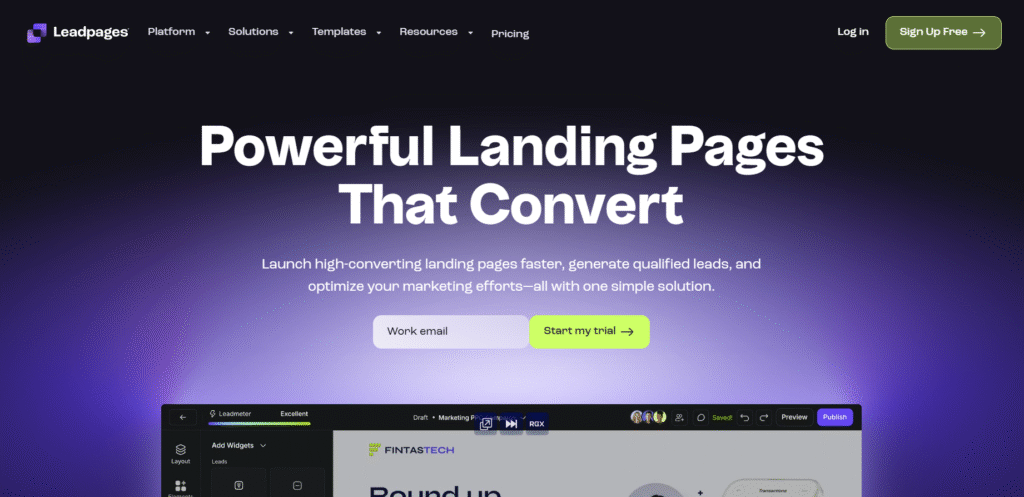
Before you start promoting any affiliate offer, you need to understand what you’re selling. Leadpages is a drag-and-drop website and landing page builder designed for small businesses and entrepreneurs who need to get online fast without hiring developers.
The platform helps users create landing pages, websites, pop-ups, and alert bars without touching code. Think of it as the middle ground between completely DIY solutions like WordPress and expensive custom development. Someone running a coaching business or selling digital products can spin up a professional-looking landing page in an afternoon.
Their sweet spot is small business owners and solopreneurs who understand they need landing pages but don’t want to deal with the technical headaches. Marketing consultants and agencies also use Leadpages to quickly build pages for clients.
The platform includes templates, integration with email marketing tools, analytics, and A/B testing features. It’s not the cheapest option out there, but it’s positioned as a premium solution that’s still accessible to non-technical users.
How to Get Approved and Start Promoting
Getting into the Leadpages affiliate program is straightforward. They run their program through PartnerStack, which means you’ll need to create a PartnerStack account if you don’t already have one.
Head over to the Leadpages affiliate page and click through to apply. You’ll fill out basic information about yourself, your website or platform, and how you plan to promote Leadpages. They’re looking for people who have an audience interested in online business, marketing, or website building.
Approval typically happens within a few business days. They accept bloggers, YouTubers, course creators, and social media influencers. The key is demonstrating you have an audience that matches their target customer profile.
Once approved, you’ll get access to your affiliate dashboard where you can grab your unique tracking links, view performance stats, and access promotional materials. They provide banner ads, but honestly, text links and genuine recommendations convert better than banner blindness in most cases.
Who Actually Buys Leadpages
This matters more than you think. Understanding who converts helps you create content that speaks directly to their needs and positions Leadpages as the solution they’re already looking for.
The typical Leadpages customer is a small business owner or entrepreneur building their online presence. They’re often coaches, consultants, course creators, ecommerce store owners, or agency owners. These folks understand the value of landing pages but don’t want to mess with complicated technical setups.
They’re past the “completely free” stage and willing to invest in tools that save time. The psychographic profile is someone who values their time highly, is willing to pay for simplicity, and needs professional results without the professional price tag of custom development.
Marketing consultants and agencies represent another solid segment. They use Leadpages to quickly spin up client campaigns without reinventing the wheel each time. The template library and ease of use mean they can deliver faster while maintaining margins.
The pain points you want to address in your content are time waste, technical frustration, looking unprofessional online, and the fear of missing out on sales because their current setup doesn’t convert. These are the emotional triggers that get people to click your affiliate link.
Traffic Sources That Actually Work for This Offer
Let’s talk about where to send people who might actually buy. Not all traffic is created equal, and Leadpages has specific audiences that convert better than others.
Organic search is your best long-term play. People searching for landing page builder comparisons, Leadpages alternatives, or “how to create landing pages” are already in buying mode. Content targeting these keywords naturally leads to your affiliate link. Write comparison posts like “Leadpages vs Unbounce” or tutorial content about building landing pages. The 90-day cookie gives you room for people to research before buying.
YouTube tutorials work exceptionally well for visual learners who want to see the platform in action before committing. Create walkthroughs showing how to build specific types of landing pages. A video titled “Building a Webinar Registration Page in 10 Minutes” that uses Leadpages naturally leads to affiliate conversions. Put your affiliate link in the description and mention it at the end of the video.
Email marketing to an existing audience converts if your list consists of online business owners or marketers. The key is timing and context. Don’t just blast your list with a random Leadpages promotion. Instead, send it when it makes sense, like in a series about building your online business infrastructure or during a promotion around landing page optimization.
Facebook groups for entrepreneurs and marketers can work, but you need to add value first. Answer questions about landing pages, share insights, and become helpful before dropping affiliate links. When someone asks about landing page tools, that’s your opening to share a genuine recommendation with your affiliate link.
Paid ads are trickier with this offer because the compliance rules through PartnerStack and Leadpages can be strict. You’ll need approval before running any paid campaigns. If you do get approved for paid traffic, focus on retargeting people who visited your content but didn’t convert yet. The economics work better when you’re not paying for cold traffic.
The worst traffic sources for this offer are general freebie-seeking audiences, people not in the business niche at all, and anyone looking for completely free solutions. They won’t convert no matter how good your pitch is because they’re not in buying mode.
Creating Content That Converts
The difference between content that makes you money and content that just exists is understanding the buyer’s journey. Someone ready to buy Leadpages is usually comparing options, looking for validation their choice is right, or searching for specific features.
Comparison content converts like crazy. Posts comparing Leadpages to ClickFunnels, Unbounce, Instapage, or other landing page builders attract people actively choosing between platforms. Make the comparison fair and honest. Point out where Leadpages wins and where it doesn’t. This builds trust and your affiliate commission comes from being helpful, not salesy.
Tutorial content works when tied to outcomes. Instead of generic “how to use Leadpages” posts, focus on specific goals. How to build a high-converting opt-in page. How to create a webinar registration funnel. How to set up A/B tests that actually improve conversions. Each tutorial demonstrates value while naturally linking to your affiliate signup.
Case studies and results posts tap into social proof. If you’ve used Leadpages yourself, share specific results. What pages did you build, what conversion rates did you hit, how much time did it save you. Real numbers beat vague claims every time. Even if you don’t have personal results, you can create posts about successful Leadpages users and how they leveraged the platform.
Problem-solution content addresses specific pain points. Posts about fixing low conversion rates, speeding up landing page creation, or building pages without coding skills all lead naturally to Leadpages as a solution. The key is addressing the problem thoroughly before introducing your solution.
In all your content, place your affiliate link naturally where it makes sense in context. Don’t just dump links randomly. When you mention Leadpages as a solution, that’s when you link it. When comparing features, link to both options so people can check them out.
What You Need to Know About the Money
Let’s get specific about commissions because vague promises don’t pay bills. Leadpages pays 50% recurring commission on all plans. Their pricing breaks down like this: Standard plan at $99/month gets you $49.50 monthly, and the Advanced plan at $199/month earns you $99.50 monthly.
The recurring structure means you’re building an income stream, not just collecting one-time payments. Your first month you might earn $100 from two referrals. If those customers stay, next month you earn that $100 again plus whatever new sales you add. By month six, you could be earning from all six months of referrals combined.
Payments happen monthly through PayPal or Stripe. You need verified accounts with either payment processor. There’s typically a delay where you receive payment for the previous month’s earnings. So May’s commissions hit your account around mid-June. This is standard across most affiliate programs and helps account for refunds and chargebacks.
The refund policy affects you because if someone refunds within the guarantee period, that commission gets clawed back. Leadpages offers a 14-day money-back guarantee. Promoting to the right audience minimizes refunds because people who actually need landing pages don’t typically refund.
Realistic Earnings Expectations
Here’s what’s actually possible without the hype. A complete beginner starting from zero audience will struggle to make meaningful money in the first few months. You need traffic first. Expect three to six months of building content and audience before seeing consistent sales.
Someone with an existing blog getting 5,000 monthly visitors in the business or marketing niche could realistically expect two to five sales monthly after creating targeted content. That’s $100 to $250 in recurring monthly income. Not quitting your job money, but solid side income that compounds.
An established influencer or blogger with 50,000 monthly visitors could potentially hit 20 to 30 sales monthly. That’s $1,000 to $1,500 monthly recurring. Now we’re talking about meaningful income that can cover rent or reinvest in growth.
The key variable is traffic quality, not just quantity. Targeted traffic from people actually interested in landing page solutions converts infinitely better than general traffic. A thousand visitors from a landing page comparison post will convert better than ten thousand random visitors.
Your conversion rate will likely land between 1% to 3% of qualified traffic. Qualified meaning people who read your full review or comparison, not just random page views. If you send 100 people who read your full Leadpages review, expect one to three to sign up.
Common Challenges You’ll Face
No affiliate program is perfect, and knowing the obstacles ahead helps you plan around them. The biggest challenge with Leadpages is the competition. Every marketing blogger and business YouTuber is promoting landing page builders. Your content needs to stand out with unique angles, better information, or stronger personal experience.
The price point works both ways. The $99 monthly standard plan means decent commissions per sale, but it also means some potential customers bounce when they see the price. You’ll send traffic that converts at lower rates than cheaper tools. Position this correctly by targeting people who understand that serious tools cost money.
The platform itself isn’t perfect, and you shouldn’t pretend it is. Some users find the templates limiting compared to full custom options. The integrations, while solid, aren’t as extensive as some competitors. Being honest about limitations actually builds trust and makes your recommendations stronger.
Getting approved for paid advertising can take extra time and effort. PartnerStack and Leadpages review paid traffic strategies carefully. If you want to scale with ads, plan for a longer approval process and strict compliance requirements.
The market changes fast. New landing page builders launch regularly, and existing ones update features constantly. Your comparison content can become outdated. Plan to update your top-performing content every few months to stay accurate and maintain rankings.
Who This Program Isn’t For
Let’s be direct about when to skip this opportunity. If your audience is broke beginners looking for free tools only, don’t waste your time promoting Leadpages. They won’t convert, and you’ll just frustrate yourself with high traffic and zero sales.
If you’re in a completely unrelated niche like fitness, gaming, or lifestyle content with no business angle, Leadpages doesn’t fit. Don’t try to force it. Find affiliate programs that match your actual audience.
If you’re looking for massive commissions per sale from high-ticket products, the $50 to $100 monthly recurring might feel slow. Direct sales of $2,000 courses obviously pay more upfront. But remember that recurring commissions compound while one-time sales don’t.
If you hate the idea of promoting software you haven’t personally used, either test Leadpages yourself first or skip it. Authentic recommendations convert better, and readers can smell fake enthusiasm from a mile away.
Making Your First Sale
You’ve joined the program, now what? Start with one piece of high-quality content targeting a comparison keyword. “Leadpages vs [competitor]” posts rank well and attract buying intent. Spend time making it genuinely useful with real feature comparisons, pricing breakdowns, and honest pros and cons for each option.
Put your affiliate link naturally in the intro, in the conclusion, and next to any mention of Leadpages throughout the post. Don’t overdo it with 20 links, but make sure people can easily click through when they’re convinced.
Promote that post. Share it in relevant Facebook groups, send it to your email list if you have one, post it on your social media. The first sale always takes the longest because you’re building momentum from zero.
While waiting for organic rankings to kick in, create two more pieces of content around Leadpages. Maybe a tutorial and a problem-solution post. Three strong pieces of content give you better chances of ranking and convert different types of searchers.
Be patient but persistent. Most affiliates give up after a month of no sales. The ones who win stick around for six months, keep improving their content, and build momentum slowly. Your first sale proves the system works. Then it’s just about scaling what’s working.
Final Thoughts

The Leadpages affiliate program works best for people who already have an audience interested in online business, marketing, or building websites. The 50% recurring commission structure rewards you for building long-term value instead of churning through one-time sales.
You won’t get rich overnight, but if you’re willing to create quality content, target the right audience, and give it six months to build momentum, you can create a solid recurring income stream. The key is matching real audience needs with a product that actually solves their problems.