
Putterball Affiliate Program: How to Make Money Promoting This Golf Game
Ever scrolled past one of those “portable beer pong golf” ads and thought, “People actually buy this stuff?” They do. To the tune of $250 per kit. And with Putterball’s affiliate program, you can pocket $16 every time someone decides their backyard needs a golf-pong hybrid game. Not life-changing money, but if you’re targeting the right crowd, those $16 commissions add up faster than you’d think.
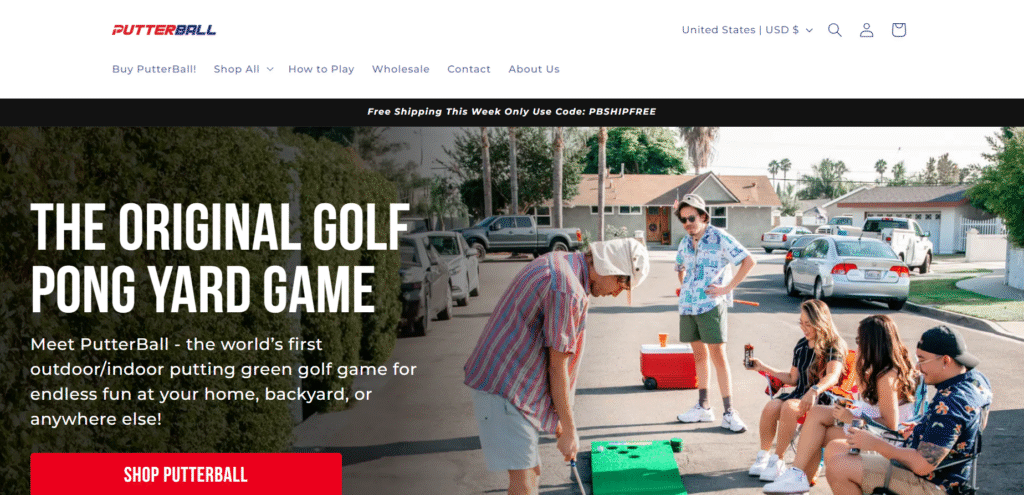
Quick Stats
💰 Commission: 6.40% per sale (~$16 per $250 kit)
🍪 Cookie Duration: 10 days
💳 Payment Terms: Monthly via FlexOffers
🎯 Network: FlexOffers
⏱️ Minimum Payout: $50
Why Putterball Actually Converts (When You’d Think It Wouldn’t)
Here’s the thing about novelty games. They sell like crazy during three specific windows: bachelor parties are being planned, holiday gift panic sets in, or someone’s scrolling Instagram drunk on a Friday night thinking “my next BBQ needs this.”
Putterball hit the sweet spot. It got featured in Forbes, Golf Magazine, and the New York Post, which means it’s not just another Kickstarter flop. Real media coverage translates to brand trust, and brand trust means people actually complete checkout instead of abandoning their cart.
The economics are straightforward. A $250 product with 6.40% commission gives you roughly $16 per conversion. Sell five kits and you’ve made $80. Sell twenty and you’ve covered a car payment. The math isn’t complicated, which honestly makes this easier to plan around than those high-ticket affiliate programs where you need to convince someone to drop $2,000 on a course.
Who’s Actually Buying This Thing
Let me save you some wasted ad spend. Putterball buyers fall into four distinct camps, and if you’re not targeting one of these, you’re burning money.
First up: the party planners. These are people aged 25-40 who host things. Backyard BBQs, tailgates, family reunions. They’re searching “unique party games” and “outdoor entertainment ideas” usually 2-3 weeks before their event. They’ve got a budget and they’re looking for something Instagram-worthy.
Then you’ve got the golf enthusiasts who don’t take themselves too seriously. Not the country club types, more like the “scramble tournament and beer” crowd. They see the golf angle and think it’s hilarious. They’re already following golf meme accounts and watching Good Good on YouTube.
Gift buyers are your bread and butter around holidays. Someone searching “gifts for dad who has everything” or “unique groomsmen gifts” is in buying mode. They need something that looks thoughtful but fun, and a $250 price point feels substantial without being crazy.
Finally, there’s the corporate event planners. Company retreats, team building events, client entertainment. These people have actual budgets and are looking for activities that don’t require everyone to be athletic. One corporate sale is worth five individual buyers in terms of headache.
Getting Approved and Set Up (The Boring But Necessary Part)
The Putterball affiliate program runs through FlexOffers, which means you need to be approved by FlexOffers first, then apply for the Putterball program specifically.
FlexOffers approval is pretty standard. They want to see you have an actual platform, whether that’s a website, YouTube channel, or substantial social following. If your blog has ten posts and no traffic, you’re probably getting rejected. But if you’ve got a site with even modest traffic in relevant niches like sports, outdoors, gifts, or party planning, you’re good.
Once you’re in FlexOffers, search for Putterball and apply. Approval is usually quick, often within 24-48 hours. They’re not super picky because it’s not like you can destroy their brand reputation selling backyard games.
After approval, you’ll get your affiliate links and tracking dashboard. FlexOffers has a decent interface, nothing fancy but it works. Your links will have tracking parameters so you can see exactly which traffic source is converting.
Traffic Strategies That Actually Work
This is where most affiliate marketers mess up with products like Putterball. They try to build some generic “outdoor games” blog and wonder why nothing converts. Specificity wins here.
Content Marketing Approach
If you’re going the SEO route, you need to think about search intent. Someone typing “putterball review” is close to buying. Someone searching “fun backyard games” is browsing. Big difference.
Create content around high-intent searches. “Best portable golf games,” “Putterball vs BeerPong Golf comparison,” “Is Putterball worth $250?” These are people researching a purchase decision.
But here’s the move most people miss: create event-specific content. “10 Bachelor Party Games That Don’t Suck” with Putterball as the featured recommendation. “Tailgate Games That Fit in Your Trunk” where Putterball is the obvious solution. You’re catching people in planning mode, not just product research mode.
Video content crushes with this product because it’s visual. A 90-second Instagram Reel or YouTube Short of people playing Putterball at a party sells better than a thousand-word review. If you can film or compile user-generated content showing actual gameplay, your conversion rate jumps.
Paid Traffic Angle
Facebook and Instagram ads work surprisingly well for Putterball, but you need to be smart about it. Broad targeting wastes money. Instead, go specific: people who like golf but also follow party/entertainment pages. Men aged 28-45 who are engaged or married (they’re planning events and buying gifts).
Your ad creative should show the product in action at a party, not just product shots. Social proof crushes here. “As Seen in Forbes” in your ad copy adds instant credibility. Keep your cost per click under $1.50 and you can be profitable at a 2-3% conversion rate.
Google Shopping ads can work because Putterball has decent brand searches now. If someone’s searching “buy putterball,” you want to be there. The margins are tight though, so watch your ROAS carefully.
Pinterest is an underrated channel for this. Create pins for “unique gift ideas,” “backyard party games,” “groomsmen gift ideas.” Pinterest users are planners with intent. They save things they’re seriously considering buying.
Email and Influencer Path
If you’ve got an email list in a relevant niche, this is an easy promote. One well-timed email before summer or during holiday season can move units. The key is the subject line: “Found the perfect [bachelor party gift / tailgate game / corporate retreat activity].”
For influencers with even modest followings, this converts because it’s visual and fun. A golf influencer with 20,000 followers can probably move 10-15 units with one solid Instagram story series. At $16 per sale, that’s $160-240 for posting some stories.
The Reality Check (Stuff That’ll Trip You Up)
Let’s talk about what makes this program harder than it looks on paper.
That 10-day cookie is short. Really short. Most quality affiliates want 30-60 days because purchasing decisions take time. With Putterball, if someone clicks your link and doesn’t buy within 10 days, you get nothing. This means you need to hit people when they’re in active buying mode, not casual browsing mode.
The commission rate of 6.40% is fine but not amazing. You need volume to make this worthwhile. If you’re only driving 100 clicks a month, even with a solid 3% conversion rate, you’re making $48. That’s coffee money, not rent money.
There’s also zero repeat customer potential. Nobody’s buying a second Putterball. Once someone owns one, they’re done. This means you constantly need new traffic, new buyers. You can’t build a recurring revenue stream here.
Seasonal fluctuations hit hard. This product spikes May through August (outdoor season) and November through December (holiday gifts). January through April is dead zone. If you’re running paid traffic, you need to adjust budgets based on seasonality or you’ll lose money during slow months.
Competition isn’t crazy yet, but it’s building. More affiliates are finding this program, which means your paid traffic costs will creep up over time. Get in now while CPCs are reasonable.
Making the Math Work
Let’s get real about earnings potential because most affiliate reviews wildly oversell this stuff.
If you’re sending 1,000 visitors per month to solid content with Putterball links, and you convert at 2% (which is decent for affiliate marketing), that’s 20 sales. At $16 per sale, you’re making $320 monthly. Not bad for passive income, but not quitting your job either.
Scale that to 5,000 monthly visitors with optimized content and multiple traffic sources, you’re looking at 100 sales at 2%, which is $1,600 monthly. Now we’re talking about meaningful money.
The play here is building multiple revenue streams with similar products. Don’t just promote Putterball. Build a site or channel around party games, outdoor entertainment, unique gifts. Putterball becomes one of ten affiliate products you’re promoting. Suddenly that $320 becomes $3,200 across multiple programs.
For paid traffic, you need a minimum $5 cost per acquisition to be profitable. If your CPC is $1.50 and your conversion rate is 2%, you’re spending $75 to make $16. That math doesn’t work. You need to either get your CPC under $0.50 (hard) or improve your conversion rate above 5% (more realistic with great landing pages).
Should You Bother?
Here’s my honest take. The Putterball affiliate program isn’t going to make you rich, but it’s a solid supplementary income source if you’re already in the right niches.
Join this program if you’re already creating content around golf, outdoor activities, party planning, or unique gifts. It slots in naturally and converts decently. The brand recognition from major media features helps your conversion rate.
Skip this program if you’d need to build a platform from scratch just to promote it. The commission structure doesn’t support the time investment required to create a whole content strategy around one product.
This works best as part of a broader affiliate strategy, not as a standalone focus. Think of it as a puzzle piece, not the whole puzzle.
Getting Started Today
If you’ve read this far and you’re ready to start, the process is simple. Apply to FlexOffers first, then apply for the Putterball program once approved. Start with content creation around high-intent keywords or event-specific angles.
Test small with either organic content or minimal paid traffic. See if your audience responds. If you get traction, scale up. If crickets, move on. Not every affiliate program works for every marketer, and that’s fine.
The beauty of affiliate marketing is low risk. You’re not buying inventory. You’re not handling customer service. You’re just connecting people who want a fun backyard game with a product that delivers on that promise.
Join the Putterball Affiliate Program through FlexOffers and see if those $16 commissions add up faster than you expected. Or don’t, and keep scrolling for the next opportunity. Either way, you know exactly what this program offers and whether it fits your strategy.