
SEMrush Affiliate Program: How To Make Money With It
The SEMrush affiliate program pays $200 for every paid subscription you refer. That’s not a typo. While most affiliate programs in the SEO niche pay $30 to $50, SEMrush is handing out $200 commissions with a generous 120-day cookie window. If you can send just 10 sales per month, you’re looking at $2,000 in recurring income. The question isn’t whether this program is worth joining, but whether you know how to actually promote it and get those sales.
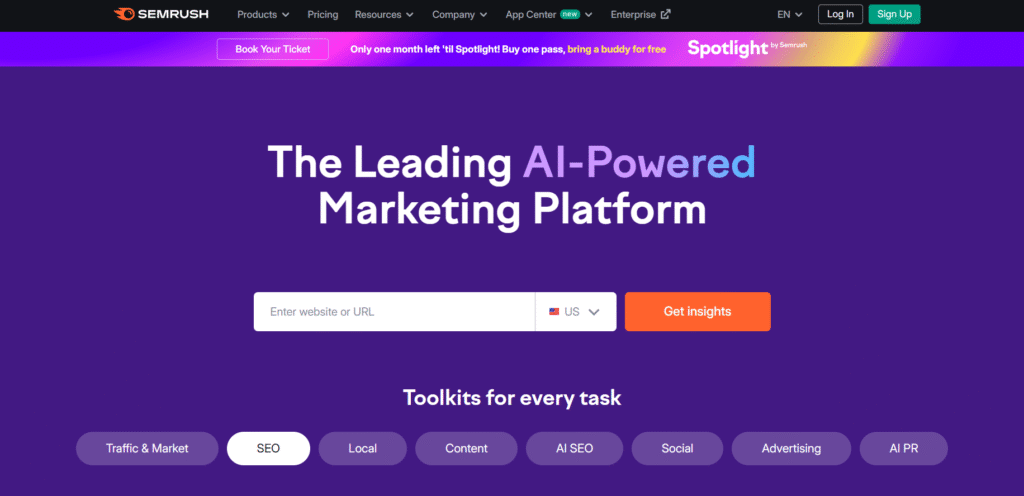
Join the SEMrush Affiliate Program
Quick Stats
💰 Commission: $200 per paid subscription | $10 per lead | $0.01 per signup
🍪 Cookie Duration: 120 days
💳 Payment Terms: Twice monthly (10th and 25th)
💵 Minimum Payout: $50
🏦 Payment Methods: PayPal, Wire Transfer
📊 User Base: 7+ million users, including Fortune 500 companies
Why SEMrush Commissions Beat Other SEO Affiliate Programs
Most SEO tool affiliate programs pay between $30 and $70 per sale. SEMrush nearly triples that at $200 per conversion. The math here is simple but powerful. To make $2,000 per month with a typical SEO affiliate program paying $50 per sale, you need 40 conversions. With SEMrush, you need just 10.
The 120-day cookie duration gives you four full months to convert a visitor. That’s huge in the B2B SaaS space where decision cycles are longer. Your prospect can click your link today, research for weeks, get budget approval, and you still get credited for the sale.
SEMrush isn’t some unknown startup either. One in four Fortune 500 companies uses their platform. When you’re promoting a tool that Tesla, Apple, and Samsung trust, objection handling becomes way easier. You’re not convincing people SEMrush works, you’re just showing them why they specifically need it.
Understanding Who Actually Buys SEMrush
Here’s what most affiliate marketers get wrong about promoting SEMrush. They think the target audience is beginners googling “free SEO tools” and hoping for clicks. Wrong. Those people convert at maybe 0.5% because they’re not ready to spend $119 per month on software.
Your real money comes from three groups. First, freelance SEO consultants who need professional tools to serve clients and justify their rates. Second, content marketers at growing companies who just got budget approval for SEO tools. Third, agency owners who need team access for multiple clients.
These people are already convinced they need an SEO tool. Your job isn’t to sell SEO, it’s to show why SEMrush beats Ahrefs or Moz for their specific situation. That’s a much easier sale and why conversion rates on SEMrush can hit 3% to 5% with the right traffic.
Getting Approved for the SEMrush Affiliate Program
The approval process is straightforward through the Impact Radius network. You’ll need an established platform where you plan to promote SEMrush. That could be a blog about digital marketing, a YouTube channel covering SEO tutorials, or an email list of small business owners.
SEMrush reviews applications within a few days. They’re looking for affiliates who actually understand SEO and can create valuable content, not just people trying to spam affiliate links. If you have any existing content about keyword research, backlink analysis, or competitor research, that strengthens your application.
Once approved, you get access to their affiliate dashboard with tracking links, promotional materials, and real-time commission reporting. The interface is clean and shows exactly which clicks are converting, so you can double down on what works.
How To Actually Drive Sales and Earn Commissions
Let me walk you through what actually converts for SEMrush. Forget generic “best SEO tools” listicles that rank page 8 on Google. Those are saturated and convert poorly because people are still in research mode.
The money is in bottom-of-funnel content targeting people with specific problems SEMrush solves. Think “how to find competitor keywords” or “backlink gap analysis tutorial.” These searchers need a solution right now and are ready to sign up for a tool that delivers it.
Create detailed tutorial content showing SEMrush in action. Walk through finding low-competition keywords for a real website. Show how to audit technical SEO issues. Demonstrate competitor analysis for an actual business. This proves the tool works while naturally leading to your affiliate link.
Video content performs exceptionally well for SEMrush promotion. Screen recordings of you actually using the platform to solve real SEO problems convert at higher rates than written content. Upload these to YouTube targeting long-tail keywords like “SEMrush keyword magic tool tutorial” and you’ll get consistent referrals.
Paid Traffic Strategies That Work
If you want to scale past organic traffic, paid ads can work, but you need to be strategic. Direct search ads for “SEMrush” or “SEMrush pricing” are expensive and mostly capture people who would’ve signed up anyway. That’s not where your profit margin lives.
Facebook ads targeting SEO consultants and agency owners with lead magnets work better. Offer a free guide on client reporting or scaling an SEO agency, capture emails, then nurture that list with SEMrush tutorials. You’re paying $2 to $5 per lead and converting at $200 per sale with a 120-day cookie window.
Google Display ads targeting websites about digital marketing, entrepreneurship, and small business growth can work if you’re patient. Your click-through rate will be lower but cost per click is cheaper. With four months to convert, you can profit even with a longer sales cycle.
The key with paid traffic is tracking your customer acquisition cost carefully. If you’re spending $50 to make a $200 commission, you’re profitable. If you’re spending $180, you’re not. SEMrush’s affiliate dashboard tracks conversions well enough to make these calculations accurate.
Building an Email Funnel for Recurring Commissions
Email marketing is where experienced affiliates make the most from SEMrush. You’re not just making one-off sales, you’re building an asset that generates commissions month after month.
Start with a high-value lead magnet targeting your audience. For SEO consultants, that might be “The Client Reporting Template That Gets Renewals.” For content marketers, maybe “50 Content Ideas Based on Competitor Gap Analysis.” These position SEMrush as the solution without being salesy.
Your email sequence should educate first and sell second. Email one delivers the lead magnet. Email two shares a case study of SEO results. Email three teaches one specific SEMrush feature in depth. Email four directly pitches SEMrush with your affiliate link and a reminder about the free trial.
After your initial sequence, send weekly emails with SEO tips, industry news, or strategy breakdowns. Occasionally reference SEMrush when it’s genuinely relevant. This keeps your list warm and generates sales over time as people hit their buying window.
Content Angles That Convert Better Than Reviews
Generic reviews are competitive and honestly kind of boring. Instead, create content comparing SEMrush to specific alternatives your audience is considering. “SEMrush vs Ahrefs for Agency Reporting” targets people already ready to buy and just deciding between options.
Beginner-focused tutorials work surprisingly well even though SEMrush isn’t cheap. Content like “How to Do Keyword Research with SEMrush (Complete Beginner Guide)” captures people starting their SEO journey who want to learn the right way from day one. Many convert to paying customers quickly.
Industry-specific content lets you dominate micro-niches. “How Law Firms Use SEMrush for Local SEO” or “E-commerce Keyword Research with SEMrush” speaks directly to that audience’s needs. Competition is lower and conversion rates are higher because you’re solving their exact problem.
Common Challenges and How To Handle Them
The biggest objection you’ll face is price. SEMrush starts at $119 per month, which isn’t pocket change. Address this upfront by focusing on ROI, not cost. Show how one client gained through better SEO pays for SEMrush for the year. Frame it as a business investment, not an expense.
Some people prefer Ahrefs or Moz and have strong opinions about which tool is “best.” Don’t try to convince die-hard Ahrefs fans that SEMrush is objectively superior. Instead, acknowledge that both are excellent and explain specific use cases where SEMrush excels, like advertising research or PPC keyword planning.
The free trial can work for or against you. Some affiliates worry people will use the trial and not convert. In reality, the trial increases conversions significantly because people get hooked on the data. Promote the trial confidently, it’s your best tool for overcoming skepticism.
Tracking Your Success and Scaling What Works
SEMrush’s Impact Radius dashboard shows you exactly which traffic sources and content pieces are generating sales. Check this weekly and you’ll spot patterns. Maybe your YouTube videos convert at 5% while blog posts convert at 2%. That tells you where to focus your effort.
Track not just conversions but also the time between click and sale. If most conversions happen within 30 days, you can calculate ROI on paid traffic faster. If sales trickle in over the full 120 days, you need to be patient with new campaigns before judging results.
Once you identify your best-performing content, create more of it. If your “competitor analysis tutorial” is driving 60% of your sales, make five more competitor analysis tutorials targeting different niches or platforms. Scale what works rather than trying to reinvent everything.
Who This Program Isn’t For
Be honest with yourself about fit. If you don’t have an audience interested in SEO, digital marketing, or online business, SEMrush will be a tough sell. Promoting it to a fitness or cooking audience won’t work no matter how good your marketing is.
If you’re expecting passive income with zero effort, this isn’t that. The $200 commission is high because it’s not easy to convert. You need to create genuinely valuable content that educates people about SEO and naturally positions SEMrush as the solution.
Beginners without any content creation skills or marketing knowledge will struggle. SEMrush works best for affiliates who already understand SEO enough to create tutorials and demonstrate value. If you’re starting from zero, build those skills first.
Making Your First $2,000 With SEMrush
Let’s put together a realistic 90-day plan to hit your first $2,000 in commissions. That’s 10 sales at $200 each, which is absolutely achievable if you execute consistently.
Month one should focus on content creation. Publish eight to ten pieces of bottom-of-funnel content targeting specific SEMrush features or use cases. These could be blog posts, YouTube videos, or both. Include your affiliate link naturally where it makes sense, not forced into every paragraph.
Month two is about promotion and traffic generation. Share your content in relevant communities, optimize for SEO, and consider small paid traffic tests if you have budget. You might get your first few sales this month as your content starts ranking and getting views.
Month three is where things compound. Your earlier content is now ranking better and generating consistent traffic. You’re creating more content based on what worked in months one and two. You should hit 10 sales this month if you’ve been consistent with quality content.
Final Thoughts on the SEMrush Opportunity

The SEMrush affiliate program pays better than almost anything in the SEO niche. That’s not hype, that’s just math. The challenge isn’t the program itself, which is solid with great tracking and reliable payments. The challenge is whether you can create content that actually helps people solve SEO problems while naturally leading them to try SEMrush.
Focus on providing real value first and commissions second. Show people how to accomplish specific SEO tasks using SEMrush. Solve actual problems they’re facing. Be honest about when SEMrush is the right choice and when maybe it’s not. That approach builds trust and generates sales that stick.
With SEMrush’s 120-day cookie window, you’re playing a longer game than most affiliate programs. Your content from today could generate commissions four months from now. That means consistency matters more than quick wins. Keep creating valuable content month after month and the commissions will follow.